News
In the fields of construction and material handling, wheel loaders are generally regarded as versatile machines. However, a common question arises: Can wheel loaders actually perform excavation work? Many people assume that excavation is the exclusive domain of excavators; in fact, wheel loaders do possess a certain degree of excavation capability. For construction project managers and equipment operators, a thorough understanding of these capabilities is essential.
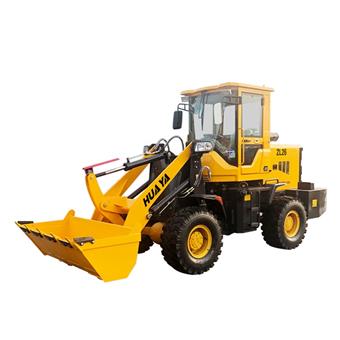
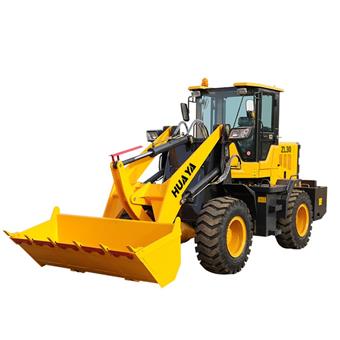
A wheel loader is a type of heavy-duty construction machinery primarily designed to move materials from one location to another. With its large front bucket, it handles tasks such as loading gravel, sand, or soil onto trucks, clearing debris, and even snow removal with ease. Unlike excavators—which are equipped with long arms and buckets designed specifically for deep digging—wheel loaders primarily rely on their buckets and hydraulic lifting arms to scoop up material.
Key Components of a Wheel Loader
Bucket: A front-mounted attachment used for loading or moving materials.
Hydraulic System: Provides power for the lifting and tilting functions.
Articulated steering system: Ensures maneuverability in tight spaces.
Engine: Provides the power needed for heavy-load lifting.
Wheel Loaders and Excavators
Although both machines are capable of performing earthmoving tasks, excavators excel particularly in digging due to their longer operating radius and specialized digging attachments. In contrast, wheel loaders are optimized for quickly loading and transporting materials, but have limited capabilities when it comes to digging deep trenches or precise holes.
So, can a wheel loader be used for digging? The answer is yes, but it depends on the specific circumstances. Wheel loaders are capable of handling light to moderate digging tasks, such as:
Loose, soft soil
Dig a shallow trench
Remove the topsoil
However, they are not suitable for heavy-duty excavation work, especially in hard or rocky soil. Their buckets are designed primarily for scooping and lifting, not for penetrating deep into the ground. Excavation depth is typically limited to just a few feet, depending on the loader’s size and bucket configuration.
Limitations
The digging depth is shallower than that of an excavator.
Accuracy is lower when digging narrow trenches or performing precision work
When excavating hard materials, the bucket is prone to wear and tear.
Despite these limitations, skilled operators can still maximize the digging efficiency of wheel loaders by employing the right techniques and fully understanding the machine’s strengths.
Wheel loaders come in a variety of specifications, and each model has a different digging capacity.
Small Wheel Loader
Ideal for narrow urban construction sites
Capable of excavating shallow soil and performing light grading operations
It offers greater maneuverability, but its bucket capacity is relatively limited.
Medium-Sized Wheel Loader
Commonly used in general construction and landscaping projects
Capable of efficiently handling medium-intensity excavation and material-handling tasks
Combines balanced power and agility
Large Wheel Loader
Used in mining, quarries, and large-scale construction projects
It can handle heavier loads, but there are still limitations on digging depth.
Requires more workspace to operate effectively
Attachments for Improving Excavation Capabilities
Cultivator: Used to loosen compacted soil
Grab: Used to pick up debris and rocks
Hydraulic hammer: Used to break up hard surfaces (though not commonly used)
Practical case studies show that wheel loaders equipped with the aforementioned attachments are more efficient than standard-configuration loaders when performing excavation-related tasks.
Although wheel loaders are not primarily designed for excavation work, the operator’s skill level can still significantly enhance their operational performance.
Accurate positioning
Position the loader so that it faces the material to be handled, in order to maximize the bucket's penetration depth.
Utilize the vehicle's forward momentum to assist in digging through compacted soil.
Bucket Operation
When starting, keep the bucket in a low position to ensure effective penetration into the material.
When raising and tilting the bucket, proceed gradually to prevent damage to the hydraulic system caused by excessive instantaneous loads.
Attachments
Consider using a multi-purpose bucket to meet a variety of operational needs, including digging, grading, and loading.
Before beginning the excavation work, a rake bucket can be used to loosen the soil.
Safety Tips
Never overload the bucket, as this could cause the loader to tip over.
Ensure that visibility around the excavation area remains clear at all times.
When performing excavation work, be sure to strictly follow the manufacturer’s operating instructions.
Advantages
Versatility: Excavation and material handling can be performed simultaneously during the same operation.
High efficiency: Capable of quickly loading trucks or moving earth.
Flexibility: Compared to excavators, it is better suited for working in tight spaces.
Disadvantages
Depth Limitation: Not suitable for deep excavation work.
Low precision: Cannot perform precise groove cutting.
Wear Issues: Heavy-duty digging operations may cause accelerated wear on the bucket and hydraulic system.
Choosing the Right Equipment
If the job involves shallow excavation or handling loose soil, a wheel loader is an excellent choice; if deep excavation is required or high precision is needed, an excavator is more suitable.
To ensure that wheel loaders remain efficient during excavation operations:
Regularly inspect the bucket and bucket teeth for wear.
Inspect the hydraulic system to prevent leaks during heavy-duty operations.
Train operators in excavation techniques to minimize the load on the machine.
Implement task rotation to prevent loaders from operating at excessive capacity during periods of heavy excavation work.
Use the appropriate attachments to safely expand the machine's versatility.
So, can a wheel loader actually perform digging operations? The answer is yes—but there are some conditions to keep in mind. Wheel loaders excel at material handling and loading, and they can also handle light-duty digging tasks; however, when it comes to heavy-duty digging operations, they cannot match excavators in terms of digging precision, depth, and efficiency. By fully understanding the loader’s limitations, employing the correct operating techniques, and attaching the appropriate attachments, operators can safely and efficiently maximize the machine’s digging potential. Ultimately, the choice of construction equipment depends on the specific requirements of the project.
Can a wheel loader dig trenches?
Yes, but only for digging shallow, wide trenches; it cannot handle deep or narrow trenches efficiently.
Which features help improve the digging performance of a wheel loader?
Multi-purpose buckets, rake buckets, and grab buckets can all effectively improve excavation efficiency.
Are wheel loaders better than excavators for excavation work?
For shallow excavation or the handling of lightweight materials, yes; but for deep excavation, no.
Can a wheel loader handle rocky terrain or hard soil?
The results are limited; hard or compacted soil can accelerate bucket wear.
How can bucket wear be prevented during excavation work?
Proper operating techniques should be used, overloading should be avoided, and tasks should be shared with other loaders or equipment on a rotating basis.