News
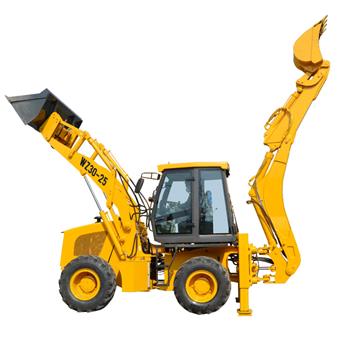
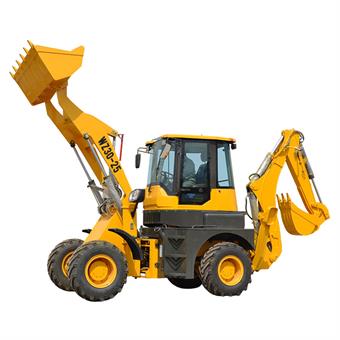
Backhoe loaders are among the most versatile pieces of construction equipment, used in excavation, trenching, material handling, and demolition. Their ability to perform multiple tasks efficiently makes them a staple in various industries, including construction, agriculture, and mining.
Understanding the classification of backhoe loaders helps in selecting the right equipment for the job. This article lists the various types of backhoe loaders, their classification based on size, application, and power, and how they meet the needs of different industries.

Backhoe loaders come in various sizes to meet specific project requirements.
Compact Backhoe Loaders:
Best for small construction sites, landscaping, and urban projects.
Lightweight and easy to maneuver.
Lower horsepower and digging depth.
Standard Backhoe Loaders:
The most commonly used type.
Ideal for general construction, utility work, and road maintenance.
A balance of power and size for versatile operations.
Large Backhoe Loaders:
Used in heavy-duty applications such as mining and large-scale construction.
Higher horsepower and digging capacity.
Can handle heavy loads with improved efficiency.
Backhoe loaders can be classified based on their drive system.
Two-Wheel Drive (2WD) Backhoe Loaders:
Cost-effective and fuel-efficient.
Suitable for use on level ground.
Requires less maintenance than 4WD models.
Four-Wheel Drive (4WD) Backhoe Loaders:
Ideal for rough terrain and muddy conditions.
Provides better traction and control.
It is more expensive but offers improved operational efficiency.
Different backhoe loaders have varying power outputs depending on their intended use.
Low-Power Backhoe Loaders (Under 75 HP):
Best for light-duty tasks such as landscaping and small-scale excavation work.
More fuel-efficient and easier to transport.
Medium-Power Backhoe Loaders (75–100 HP):
Commonly used in urban construction and utility projects.
Offers a balance between power and maneuverability.
High-Power Backhoe Loaders (Over 100 HP):
Designed for heavy-duty applications such as mining and infrastructure development.
High efficiency in large-scale excavation and material handling.
The versatility of a backhoe loader is enhanced by its attachments.
Standard Backhoe Loader:
Comes with a digging bucket and a front loader.
Ideal for general excavation and material handling.
Extended-Reach Backhoe Loader:
Features a longer boom for deeper digging.
Used for deep trenching and specialized excavation tasks.
Multi-Purpose Backhoe Loader:
Equipped with various attachments such as hydraulic hammers, augers, and grapples.
Suitable for demolition, drilling, and lifting operations.
Versatility: It can perform multiple tasks, reducing the need for additional machinery.
Cost-Effective: Saves time and money by combining excavation and loading capabilities.
Maneuverability: It is easier to operate in confined spaces than larger excavators.
Increased Productivity: Improves efficiency in construction, agriculture, and industrial applications.
What is the main function of a backhoe loader?
A backhoe loader is primarily used for excavation, trenching, material handling, and loading materials onto trucks.
What is the difference between a backhoe and an excavator?
A backhoe loader has a front loader and a rear backhoe, making it versatile, while an excavator is designed solely for digging and features a rotating cab.
How do I choose the right backhoe loader for my project?
Consider factors such as project size, terrain, power requirements, and additional attachments to find the most suitable backhoe loader.
Are backhoe loaders fuel-efficient?
Yes, especially compact and mid-sized models. However, fuel efficiency varies depending on engine power, workload, and terrain.
Backhoe loaders are classified based on size, drive system, power, and attachments, making them suitable for a wide range of applications. Whether for small landscaping tasks or heavy-duty excavation, choosing the right type ensures efficiency and cost savings. By understanding how backhoe loaders are classified, businesses and operators can make informed decisions that boost productivity and profitability.