News
Material handling in warehouses and industrial settings has undergone a revolutionary transformation, thanks to the versatility of forklifts. These powerful machines come in various types, each designed for specific tasks and environments. In this article, we explore the intricacies of 7 different Types of Forklifts, shedding light on their unique features and applications.

Counterbalance forklifts are the workhorses of warehouses, handling heavy loads with ease. With a counterweight at the rear to balance the load at the front, these forklifts are ideal for indoor use and are available in electric and gas-powered models.

For tasks requiring a high reach, reach forklifts are the go-to solution. With extendable forks, they can reach greater heights while maintaining stability. These forklifts are ideal for narrow aisles and tight spaces, ensuring efficiency in vertical storage systems.
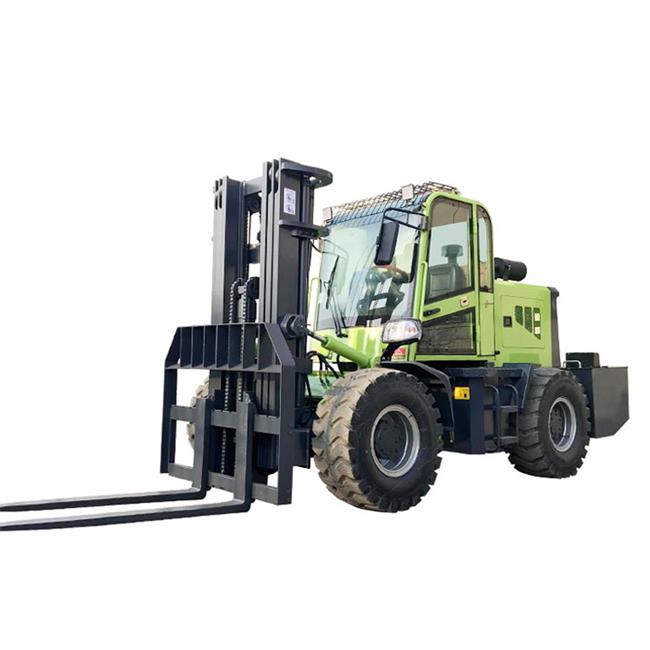
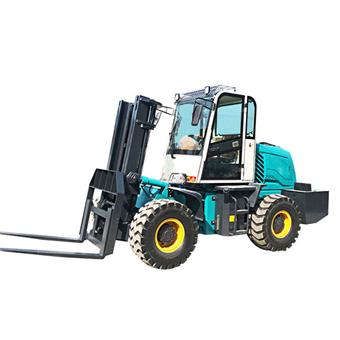
When the terrain gets rough, rough-terrain forklifts really shine. Built with sturdy tires and a robust frame, these forklifts navigate uneven surfaces with ease. Commonly used on construction sites and in outdoor storage yards, they ensure smooth operations even in challenging environments.

Industrial forklifts are the backbone of heavy-duty lifting in manufacturing facilities. With powerful engines and the ability to handle substantial loads, these forklifts are designed for demanding industrial applications, ensuring productivity and efficiency in material handling processes.

Telescopic handler forklifts, also known as telehandlers, offer versatility in both lifting and reaching. Equipped with a telescoping boom, they can extend forward and upward, making them invaluable for construction projects and tasks that require extended reach and flexibility.

Compact and maneuverable, walkie stacker forklifts are designed for smaller spaces. Operated by walking behind the machine, they are ideal for stacking and retrieving loads in confined areas, making them popular choices for retail and warehouse environments.

Efficiency is paramount in order fulfillment, and order picker forklifts are designed specifically for this purpose. Equipped with a platform for the operator to climb onto, these forklifts are ideal for retrieving items from high shelves in distribution centers and large retail spaces.
A: While counterbalance forklifts are primarily designed for indoor use, some models are suitable for outdoor applications. It is crucial to check the specifications and choose the right tires for outdoor use.
A: While rough-terrain forklifts are commonly used in construction, they are versatile enough to handle a variety of outdoor tasks. Their robust design and all-terrain capabilities make them suitable for agriculture, landscaping, and more.
A: Walkie stacker forklifts are notable for their compact size and maneuverability. They are designed for tight spaces, allowing operators to easily navigate aisles and efficiently perform stacking and retrieving tasks in confined areas.
A: Order picker forklifts are designed to retrieve items from shelves rather than handle heavy loads. Their primary purpose is to improve order fulfillment efficiency by providing operators with easy access to products at various heights.
In conclusion, the world of forklifts offers a diverse range of options to meet specific material handling needs. Whether you require the robustness of industrial forklifts or the versatility of telescopic handler forklifts, there is a forklift designed to optimize your operations. Understanding the unique features of each type enables businesses to make informed decisions, thereby enhancing efficiency and productivity in the ever-evolving field of material handling.