News
In the world of material handling, forklifts play a crucial role in streamlining operations and improving efficiency. However, not all forklifts are created equal. This blog post aims to shed light on the key differences between a standard forklift and a rough-terrain forklift, providing valuable insights for businesses looking to optimize their logistics and material handling capabilities.
A forklift, also known as a lift truck or forklift truck, is a powered industrial truck used to lift and move materials over short distances. These versatile machines are commonly used in warehouses, manufacturing facilities, and distribution centers.
Indoor Use: Forklifts are designed for indoor use on smooth, level surfaces.
Tires: They typically have cushion or pneumatic tires suitable for indoor environments.
Load Capacity: Forklifts come in various sizes and capacities to handle different loads.
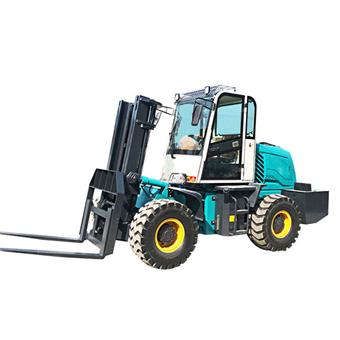
Rough-terrain forklifts, as the name suggests, are designed to operate in challenging outdoor conditions. Here are the key differentiators:
Terrain Compatibility: Unlike standard forklifts, rough-terrain forklifts are designed to navigate uneven and rough outdoor surfaces.
Tires: They are equipped with larger, thicker tires with deep treads to provide stability and traction on unpaved or uneven terrain.
Versatility: Rough-terrain forklifts are highly versatile and can handle a variety of tasks, from construction sites to agricultural operations.
Construction Sites: Ideal for lifting and moving materials on construction sites where the ground may be uneven.
Farming Operations: Used in agricultural settings to handle heavy loads of crops, equipment, and more.
Forestry: Rough-terrain forklifts are valuable in forestry applications for lifting and transporting logs.
In summary, while both forklifts and rough-terrain forklifts are used for material handling, their designs and capabilities are tailored to different environments. Choosing the right type of forklift for your operation depends on the specific needs of your business and the nature of the work environment.
While standard forklifts are designed for indoor use, some models can be equipped with features such as outdoor tires for limited outdoor applications.
Rough-terrain forklifts excel in construction by providing stability on uneven surfaces, making them ideal for lifting and moving heavy materials on construction sites.
While rough-terrain forklifts are versatile, it is essential to consider the specific conditions of the outdoor environment. Extreme terrain may require specialized equipment.
In some cases, standard forklifts can be used on gravel surfaces with the right tires. However, rough-terrain forklifts are better suited for challenging outdoor terrain.
Regular maintenance, including tire inspections and lubrication, is essential for ensuring the optimal performance of rough-terrain forklifts, especially given their exposure to challenging outdoor conditions.