News
When exploring the world of construction equipment, it’s easy to get confused by the many types of machinery available. Two such commonly misunderstood pieces of equipment are the front-end loader and the backhoe. While they may share some similarities, they differ in design, functionality, and applications.

A front-end loader, often referred to simply as a loader, is a versatile machine primarily used for moving and lifting heavy materials. Its defining feature is a large bucket at the front, which can scoop, lift, and transport loose materials such as dirt, gravel, or sand.
Large front-mounted bucket.
Designed for carrying and moving heavy materials.
Commonly used in construction, landscaping, and agricultural applications.
Does not have a rear digging attachment.

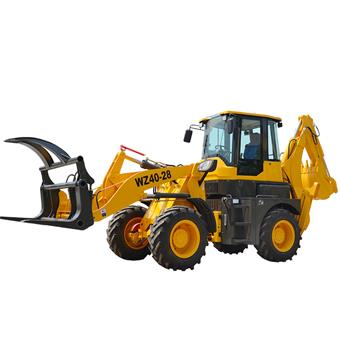
A backhoe is a multi-functional piece of equipment that combines the capabilities of a loader and an excavator. It features a loader bucket at the front and a digging arm at the back, making it ideal for tasks that require digging and material transport.
A loader bucket at the front for lifting and moving materials.
Rear digging arm (backhoe) for excavation tasks.
Suitable for trenching, pipe laying, and demolition.
Widely used in construction, public works, and landscaping.
The choice between a front-end loader and a backhoe depends on your project’s needs:
Choose a front-end loader if your primary focus is on lifting and transporting large quantities of materials.
Choose a backhoe if your project involves digging, trenching, or tasks that require a combination of excavation and material handling.