News
When it comes to heavy machinery—whether for construction, landscaping, or agriculture—the equipment you choose can have a significant impact on efficiency, operating costs, and overall project outcomes. Two of the most commonly discussed options are compact wheel loaders and skid steers. Both are versatile, but each excels in different situations. So, which one best suits your needs?

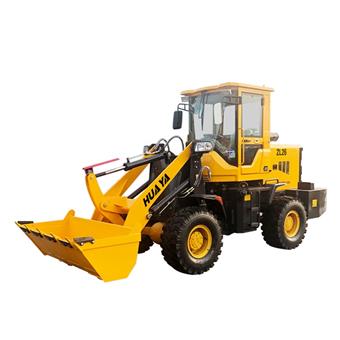
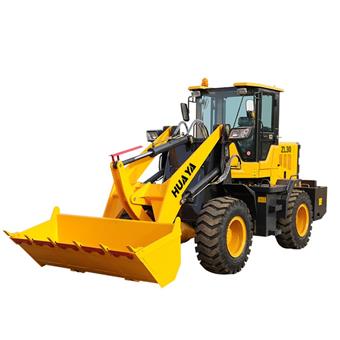
A compact wheel loader is essentially a scaled-down version of a traditional wheel loader. Equipped with articulated steering and larger wheels, it is designed for versatility, maneuverability, and consistent performance on varied terrain.
Articulated Steering: Provides tighter turning and improved control.
Higher Load Capacity: It typically exceeds that of skid steers.
Wide Range of Attachments: Works with a wide range of tools for various applications.

A skid steer is a compact, agile machine with a rigid frame and lift arms designed to accommodate a variety of attachments. Its compact size makes it ideal for tight spaces and precise tasks.
Compact Frame: Easily navigates tight spaces.
Quick Attach System: Speeds up changes to attachments.
Zero-Radius Turning: Exceptional maneuverability.
Versatility
Both machines support multiple attachments, but compact wheel loaders often accommodate heavier-duty tools, making them better suited for large-scale work. Skid steers excel at smaller, detail-oriented projects.
Terrain Handling
Compact wheel loaders, with their larger wheels and higher ground clearance, perform well on rough and uneven terrain. Skid-steer loaders—especially tracked models—handle soft ground and mud better.
Operator Comfort
Wheel loaders generally have larger, more comfortable cabs that reduce fatigue during long shifts. Skid steers can feel more cramped and less comfortable for extended use.
Maintenance
Skid steers typically require less maintenance because they have fewer moving parts. Compact wheel loaders, while durable, may require more frequent servicing.
Cost
Compact wheel loaders typically have a higher upfront cost but offer better long-term efficiency and durability. Skid-steer loaders are more affordable to purchase and are ideal for smaller businesses.
Higher load capacity per cycle.
Greater ground clearance for rough terrain.
Superior visibility of the work area.
Better long-term fuel efficiency.
Smaller footprint—perfect for tight job sites.
Lower upfront investment.
Highly agile with zero-radius turning.
Lightweight and easier to transport.
For intricate, detailed landscaping, skid steers are the better choice. For moving large amounts of soil, gravel, or mulch, a compact wheel loader is more efficient.
Not at all—many models feature intuitive controls and spacious cabs, making them comfortable even during long shifts.
Some attachments overlap, although compact wheel loaders often require larger, more robust tools.
Compact wheel loaders typically offer better fuel efficiency and durability, making them the smarter investment for larger projects.
The choice between a compact wheel loader and a skid steer depends on your job requirements. If your priorities are maneuverability, affordability, and working in confined spaces, a skid steer is the way to go. But if your projects require heavy lifting, the ability to handle rugged terrain, and long-term efficiency, the compact wheel loader is the smarter investment. Carefully assess your needs before making a choice to ensure your equipment truly drives productivity and profitability.