
News
When it comes to heavy equipment, telehandlers, and wheel loaders are two versatile machines commonly used in construction, agriculture, and industrial applications. Although they share some similarities, their designs, capabilities, and applications differ significantly. Understanding these differences can help you choose the right equipment for your specific needs.
Telehandler: A telehandler, or telescopic handler, is equipped with a boom arm that extends outward and upward, resembling a combination of a forklift and a crane. It typically has attachments such as forks, buckets, or lifts, which make it ideal for handling materials at varying heights and angles.
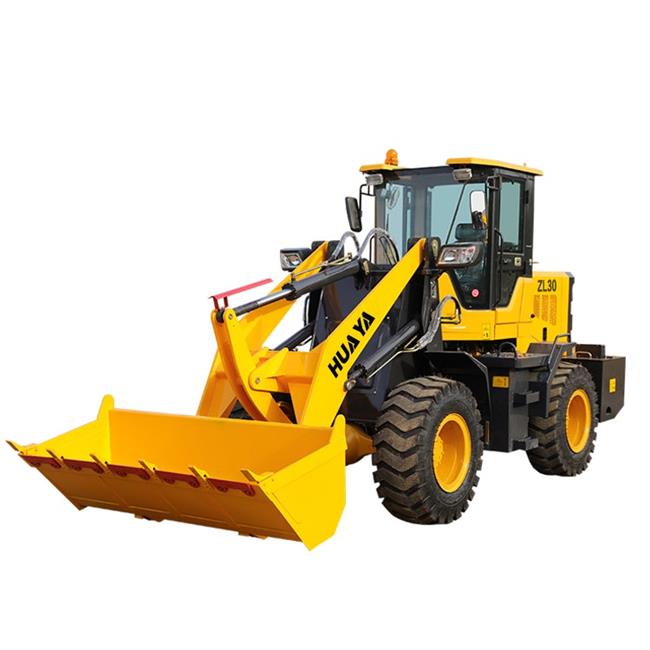
Wheel Loader: A wheel loader features a front-mounted bucket attached to articulated arms. It is primarily designed for scooping, lifting, and transporting loose materials such as sand, gravel, or debris.
Telehandler: Known for its flexibility, a telehandler excels at material handling, especially at elevated heights. It is often used for stacking materials, unloading trucks, or reaching hard-to-reach areas.
Wheel Loader: Built for power, a wheel loader is ideal for earthmoving tasks and transporting heavy loads over short distances. Its bucket can handle bulk materials efficiently, making it a workhorse on construction sites.
Telehandler: Thanks to its extendable boom, a telehandler can reach greater heights and distances. This makes it suitable for tasks such as placing materials on scaffolding or accessing hard-to-reach locations.
Wheel Loader: The reach of a wheel loader is limited to the height of its bucket arm. It is best suited for ground-level or slightly elevated tasks.
Telehandler: Telehandlers are highly versatile and can be equipped with a wide range of attachments, including pallet forks, winches, and work platforms, enabling them to perform a variety of tasks.
Wheel Loader: Although less versatile than telehandlers, wheel loaders can also use attachments such as buckets, blades, and grapples, but their primary function remains heavy-duty material handling.
Telehandler: With its four-wheel drive and steering options, a telehandler offers excellent maneuverability, making it suitable for uneven terrain.
Wheel Loader: Wheel loaders are also designed for harsh conditions and provide stability on various types of terrain, but their larger size may limit their maneuverability in tight spaces.
Telehandler: Commonly used in agriculture for stacking bales, in construction for placing materials, and in industrial settings for reaching high shelves.
Wheel Loader: Preferred in construction for moving bulk materials, in mining for loading trucks, and in waste management for clearing debris.
The choice between a telehandler and a wheel loader depends on your specific needs. If you need versatility in terms of height and reach, a telehandler is your best option. However, for heavy-duty earthmoving and material transport, a wheel loader is the optimal choice. By understanding their unique capabilities, you can maximize efficiency and productivity on your project site.